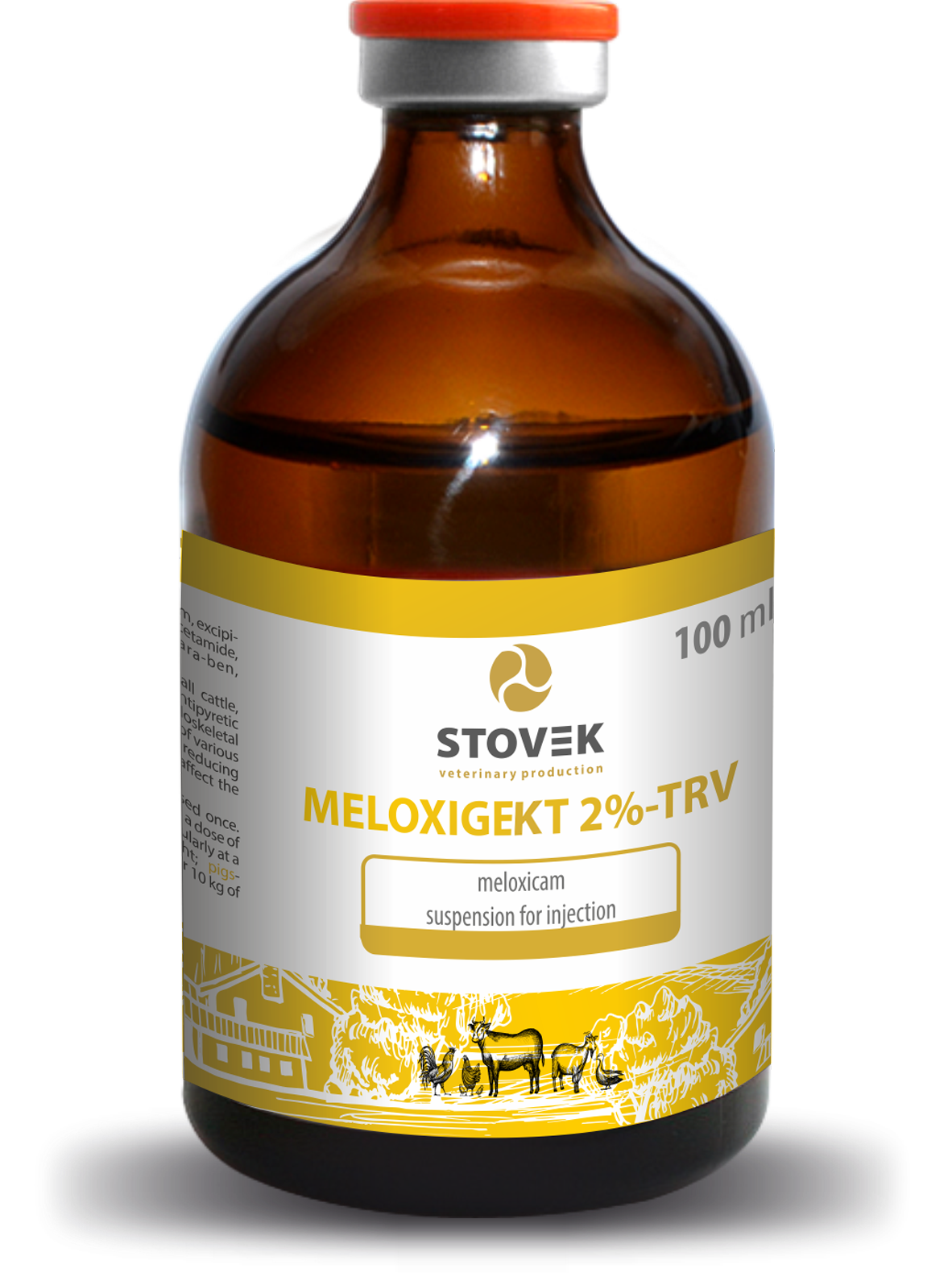
Meloxicam, which is part of the drug, belongs to the non-steroidal anti-inflammatory drugs of the oxicam class (an enolic acid derivative), and has a pronounced anti-inflammatory, analgesic and antipyretic effect.
The mechanism of action consists of selective inhibition of the enzyme cyclooxygenase (COX) and suppression of the synthesis of prostaglandins (inflammatory mediators). Meloxicam inhibits primarily cyclooxygenase-II, providing anti-inflammatory and antipyretic effects, and has little effect on cyclooxygenase-I, minimizing the development of side effects such as bleeding, ulceration and renal dysfunction.
The drug is completely absorbed after parenteral administration. Bioavailability after intramuscular administration is close to 100%. After intramuscular administration of the drug, the maximum concentration of meloxicam is created in the blood after 60-90 minutes and is maintained at a therapeutic level for up to 24 hours.
The drug is metabolized in the liver. It is excreted equally in feces and urine, mainly as metabolites. Less than 5% of the daily dose is excreted unchanged in feces, and only trace amounts of the drug are found unchanged in urine. The average half-life is 20 hours.