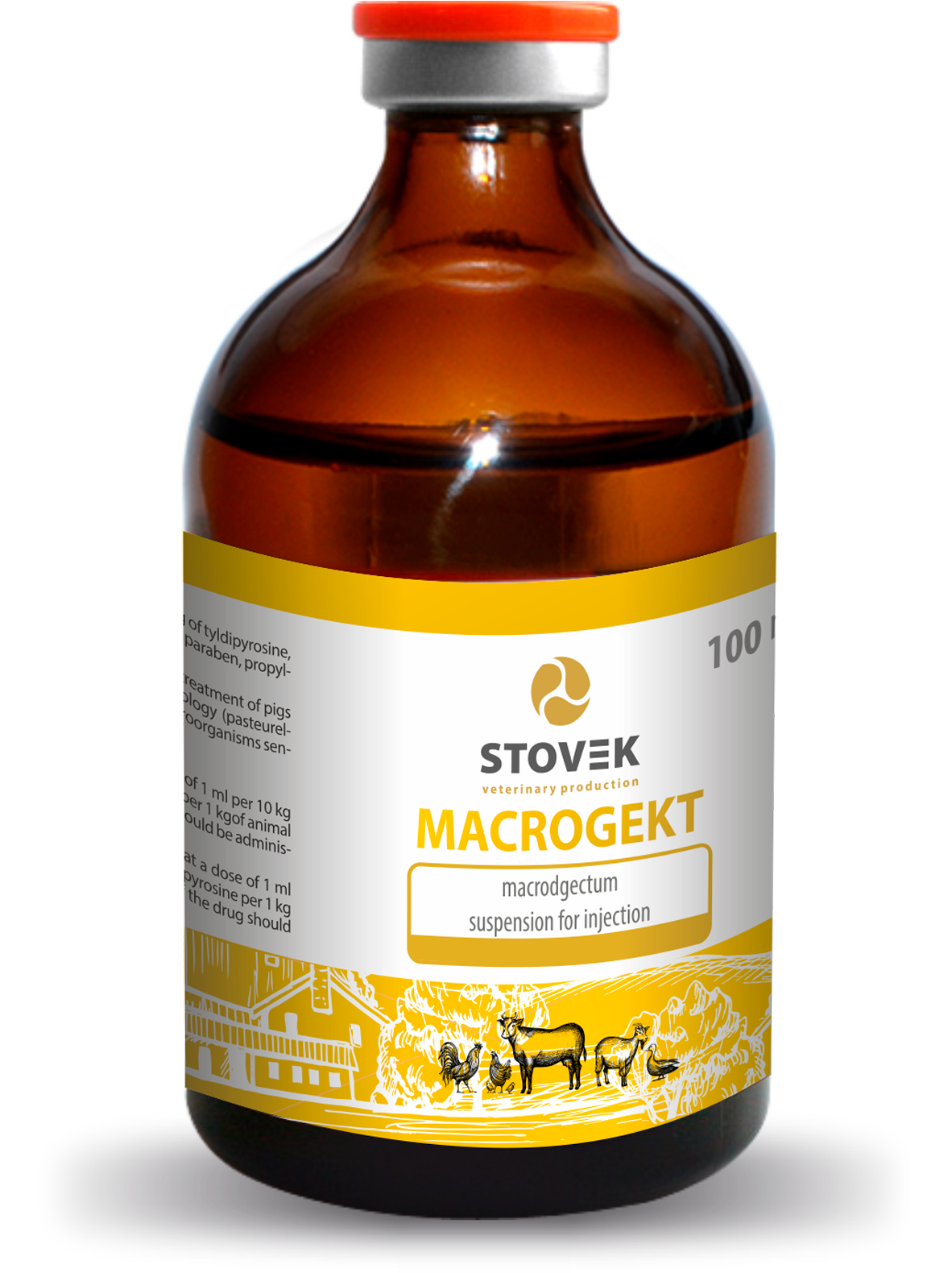
Tyldipyrosine, which is part of the drug, is a semi-synthetic tribasic 16-membered macrolide with a long period of action.
The drug has a broad spectrum of antimicrobial action, including against gram-positive (Streptococcus spp., Staphylococcus spp. (including strains producing beta-lactamases)) and gram-negative bacteria (Mannheimia (Pasteurella) haemolytica, Pasteurella multocida, Haemophilus somnus (Histophilus somni), Bordetella bronchiseplica, Actinobacillus pleuropneumoniae).
The mechanism of action is based on the inhibition of the biosynthesis of essential proteins by selective binding to bacterial ribosomal RNA and blocking the elongation of the peptide chain.
Along with this, the macrolide stimulates the body's non-specific defense mechanisms, and, accumulating in phagocytes in concentrations many times higher than the concentration of the drug in blood plasma, destroys intracellular microorganisms and prevents the generalization of the infectious process.
After administration, the drug is well absorbed from the injection site and penetrates into most organs and tissues of the body. Tildipirosine is quickly resorbed and slowly excreted from the body. The maximum concentration of the drug in the blood is recorded already 20-30 minutes after administration.
In pigs, mean lung tildipirosin concentrations peak within 24 hours and decline slowly over 17 days after drug administration.
In cattle, mean lung concentrations of tildipirosin peak within 24 hours and decline slowly over 21 days after drug administration.
In bronchial fluid, tildipirosin levels reach maximum concentrations 24 hours after drug administration and slowly decline over 21 days after administration.
Tyildipyrosine is excreted from the animal body mainly with feces, to a lesser extent with urine, and in lactating animals with milk. In case of liver and kidney dysfunction, the elimination period may increase.