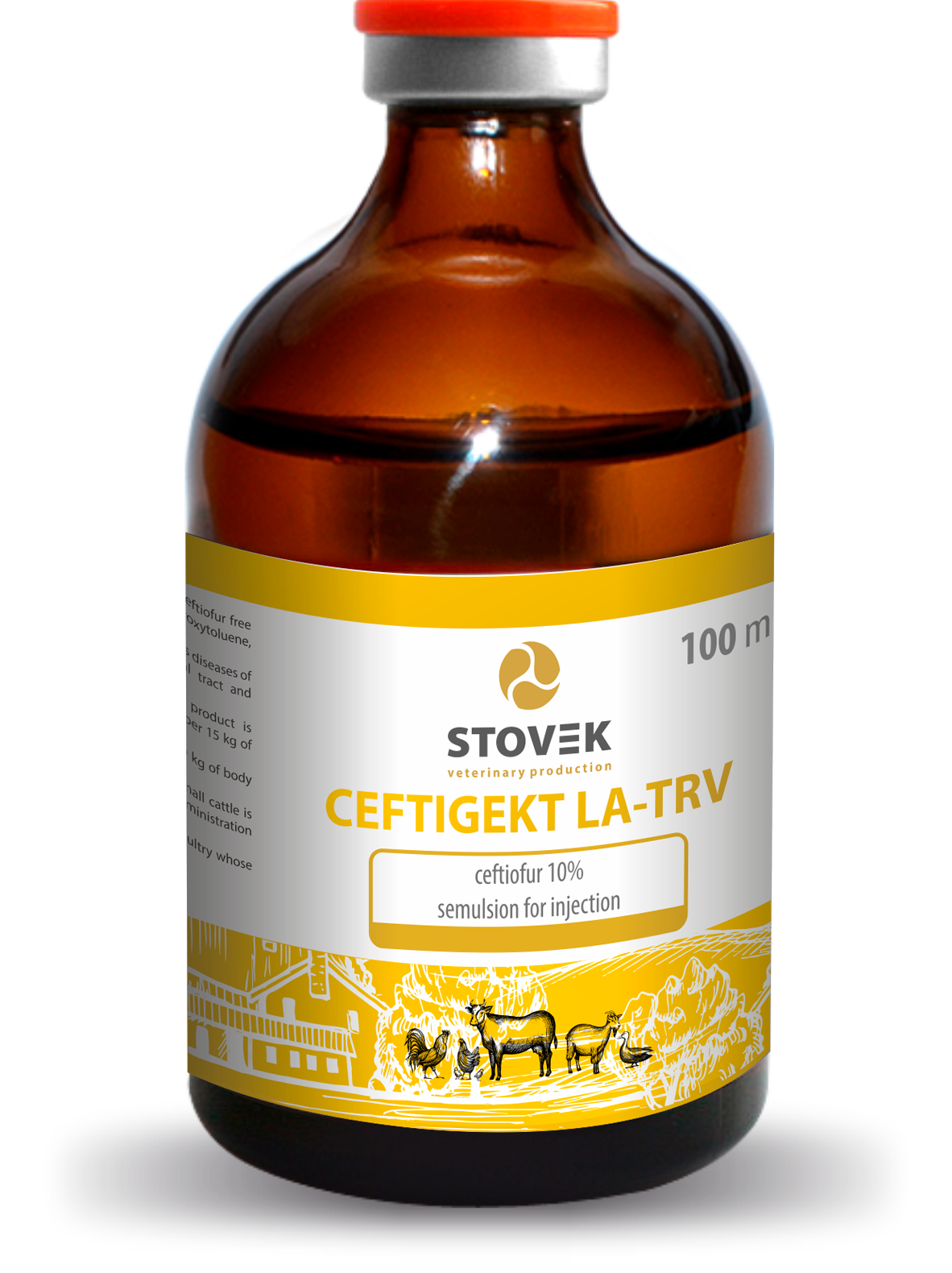
Ceftiofur is a third-generation, broad-spectrum cephalosporin antibiotic with bactericidal action against Gram-negative (Escherichia coli, Klebsiella spp., Pasteurella spp., Haemophilus spp., Actinobacillus pleuropneumoniae., Bacteroides spp., Citrobacter spp., Enterobacter spp., Salmonella spp.,) and Gram-positive bacteria (Bacillus spp., Streptococcus spp., Staphylococcus spp., Actinomyces pyogenes), including lactamase-producing strains as well as some strains of anaerobes (Proteus spp., Fusobacterium necrophorum).
The veterinary product inhibits the enzyme transpeptidase, disrupting the synthesis of peptidoglucan, a mucopeptide of the cell membrane, leading to disruption of its growth and lysis of bacteria.
After parenteral administration in therapeutic dose maximum concentration of active substance is achieved in blood plasma of cattle after 12 hours, and in pigs - after 22 hours and maintained at therapeutic level for at least 7 days.
In the body ceftiofur is rapidly metabolised to form desfuroylceftiofur, which has activity equivalent to ceftiofur against bacteria. This active metabolite binds reversibly to plasma proteins and accumulates at the site of infection, and its activity is not reduced in the presence of necrotic tissue. The elimination of the veterinary product from animals occurs mainly with urine (about 70%) and faeces (12-15%). In case of liver and kidney dysfunction, the elimination period may be prolonged.