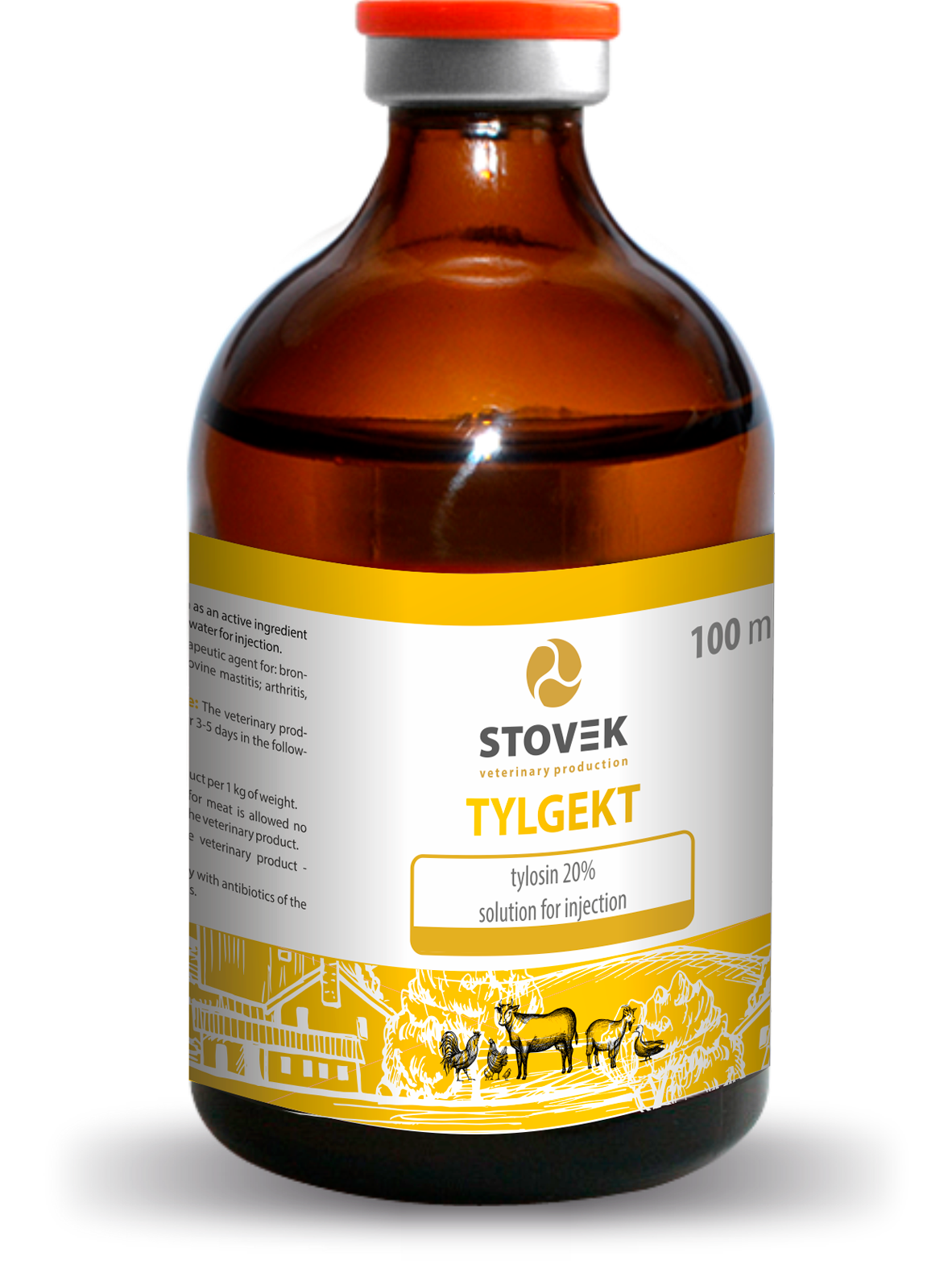
Tylosin is an antibiotic from the macrolide group. It is active against most gram-positive and some gram-negative microorganisms, including Staphylococcus spp., Streptococcus spp., Pasteurella spp., Haemophilus spp., Leptospira spp., Erysipelothrix rhusiopathiae, Corynebacterium spp., and also Mycoplasma spp., And also spp. Treponema spp.
The mechanism of action of the veterinary product is to suppress the protein synthesis of microbial cells as a result of the formation of a complex with the 50S-subunit of ribosomes.
When administered intramuscularly, the antibiotic is rapidly resorbed and reaches maximum tissue concentrations approximately 1 hour after administration. The therapeutic level of the antibiotic in the body is maintained for 20-24 hours.
Tylosin is excreted from the body mainly with bile and urine, in lactating animals also with milk.
The product, according to the degree of the exposure, belongs to low-hazard substances (hazard class 4 according to GOST 12.1.007-76).