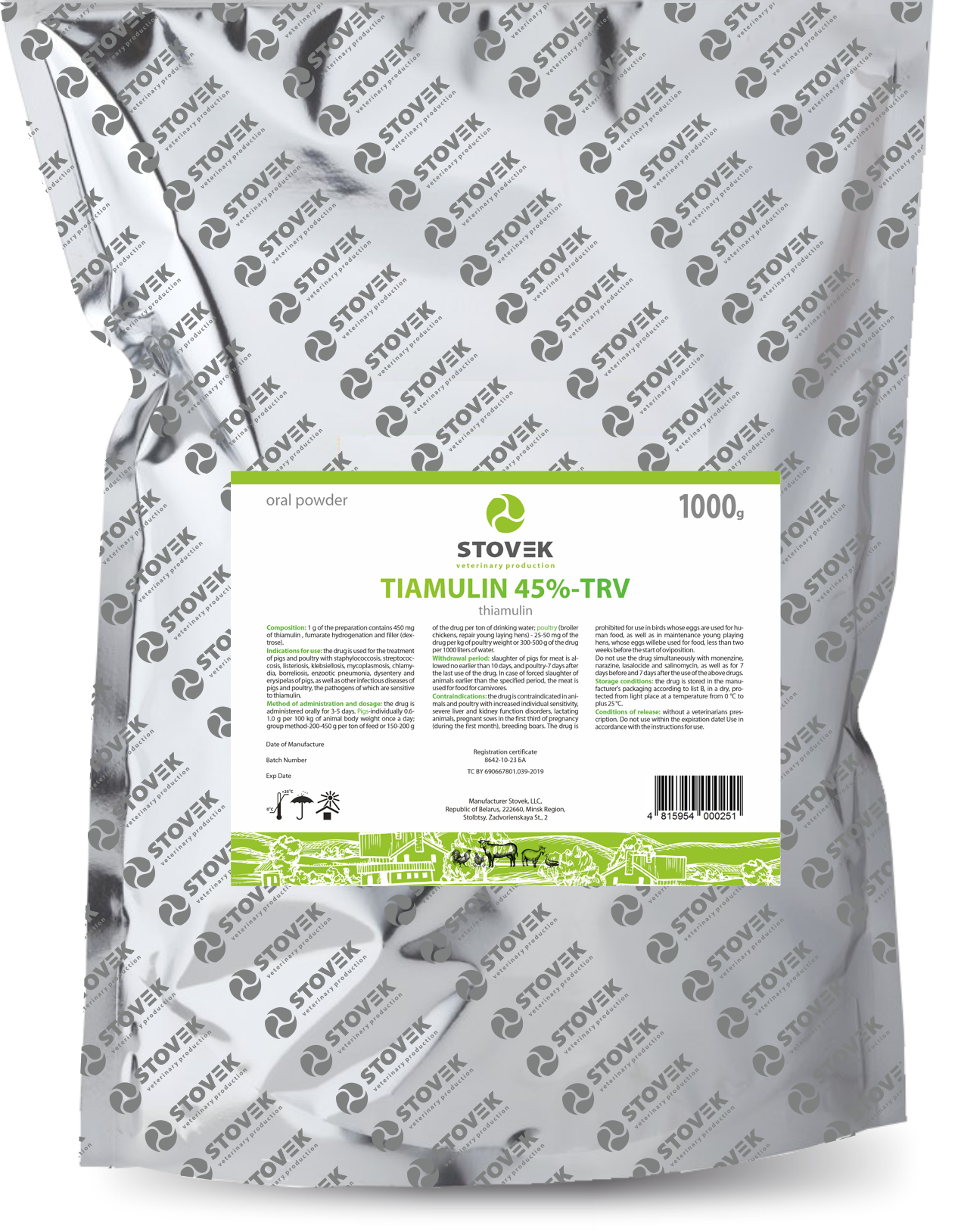
Tiamulin, which is part of the drug, is a semi-synthetic antibiotic of the pleuromutilin group and has a broad spectrum of antibacterial action. It is active against mycoplasmas (Mycoplasma hyopneumoniae, Mycoplasma hyorhinis, Mycoplasma hyosynoviae, Mycoplasma synoviae), gram-positive (Staphylococcus spp., Streptococcus spp., Listeria monocytogenes, Corynebacterium spp., Erysipelothrix rhusiopathiae, Clostridium spp.) and gram-negative bacteria (Brachyspira hyodysenteriae, Brachyspira pilosicoli, Bacteroides spp., Fusobacterium necrophorum, Actinobacillus pleuropneumoniae, Pasteurella multocida, some strains of Klebsiella spp.), as well as Chlamydia spp., Borrelia spp.
The mechanism of action consists of the binding of tiamulin to the 50-S ribosomal subunit of sensitive microorganisms, which leads to disruption of protein synthesis in the bacterial cell. After oral administration, the drug is well absorbed in the gastrointestinal tract and penetrates into all organs and tissues of the body, reaching maximum concentrations in the blood serum after 2 hours. The therapeutic concentration is maintained for 18-24 hours after administration. The drug is excreted from the body mainly with feces. In case of liver and kidney dysfunction, the excretion period may increase.