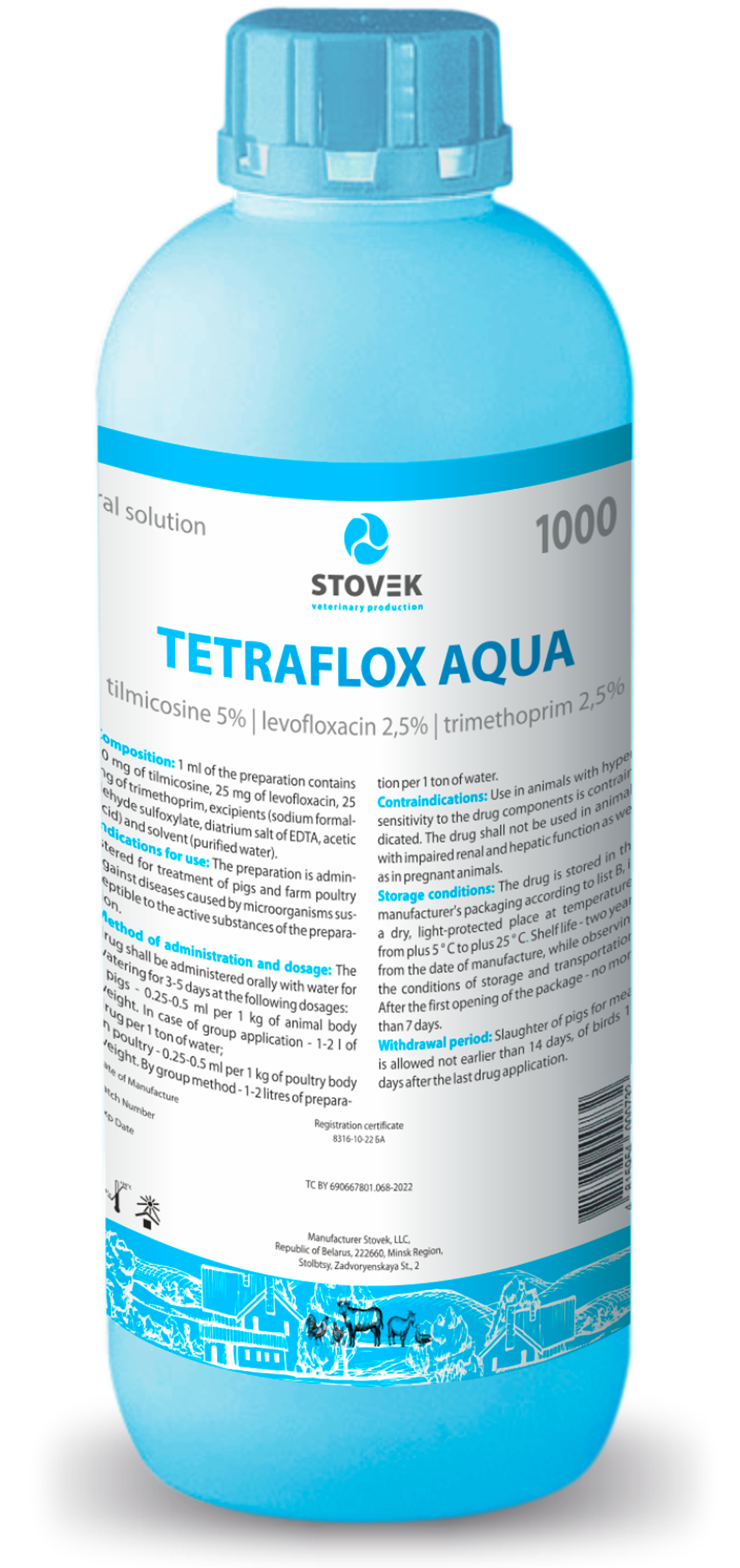
The active substances of the drug complement each other, thereby expanding the spectrum of antimicrobial activity.
The combination of active ingredients is highly active against gram-negative (Mycoplasma spp., Campylobacter spp., Enterobacter spp., Escherichia coli, Haemophilus spp., Klebsiella spp., Pasteurella spp., Proteus spp., Pseudomonas spp.. Salmonella spp., Rickettsia spp., Bordetella spp., Ornithobacterium rhinotracheale) and gram-positive microorganisms (Staphylococcus spp.. Streptococcus spp., Enterococcus spp., Mycobacterium spp., Clostridium spp., Lysteria monocytogenes, Corynebacterium spp.)
Tilmicosin is a semi-synthetic broad-spectrum macrolide antibiotic. The mechanism of antimicrobial effect is to block protein synthesis in the microbial cell at the ribosomal level.
Levofloxacin is a synthetic broad-spectrum antimicrobial bactericidal agent from fluoroquinolones group. The mechanism of action is associated with the blockade of DNA gyrase and topoisomerase IV, impaired supercoiling and cross-linking of deoxyribonucleic acid breaks, inhibition of deoxyribonucleic acid synthesis, and profound metabolic changes in the cytoplasm, cell wall and membranes.
Trimethoprim is an antibacterial agent from diaminopyrimidines group. The mechanism of action is to inhibit bacterial dihydrofolate reductase.
All components of the drug have high bioavailability; after oral administration, they are quickly absorbed from the gastrointestinal tract and penetrate into most organs and tissues. The maximum concentration in blood serum is reached in 1-2 hours, the therapeutic concentration is preserved for 24-48 hours. The active ingredients of the drug are excreted from the body in the form of metabolites and unchanged with urine and bile.