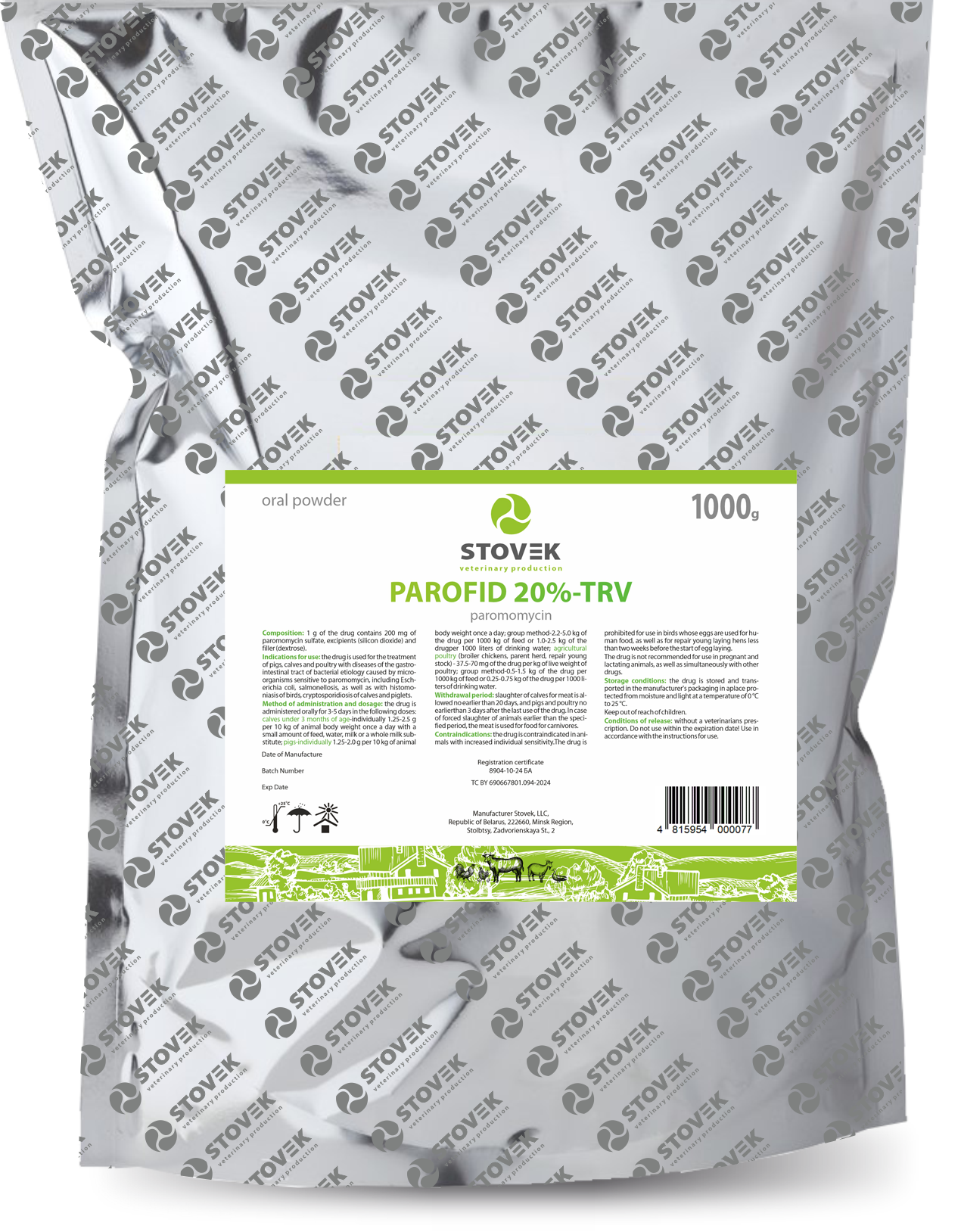
Paromomycin sulfate, which is part of the drug, belongs to a broad-spectrum antibiotic from the aminoglycoside group, which also has an antiprotozoal effect.
Shows activity against gram-positive (Staphylococcus spp., Streptococcus spp., Listeria monocytogenes, Corynebacterium spp.), and gram-negative bacteria (Escherichia coli, Enterobacter spp., Klebsiella spp., Salmonella spp.), as well as some protozoa (Histomonas meleagridis, Cryptosporidium spp.).The mechanism of action of the drug is its binding to specific receptor proteins on the 30-S subunit of ribosomes and subsequent disruption of the formation of the transport and messenger RNA complex.As a result of such interactions, protein synthesis stops (bacteriostatic effect). In high concentrations, paromomycin causes destruction of the cytoplasmic membrane of the microbial cell with its rapid subsequent death (bactericidal effect).
Paromomycin sulfate is poorly absorbed from the gastrointestinal tract, providing high concentrations in it, exerting an effect in the intestinal lumen, on the mucous membrane and in the submucosal layer. Paromomycin sulfate does not undergo biotransformation and is quickly excreted from the body, mainly unchanged with feces and partly by the kidneys.f liver and kidney function are impaired, the elimination period may be increased.
In terms of the degree of danger of impact on the body, the drug is classified as a low-hazard substance (hazard class 4 according to GOST 12.1.007-76).