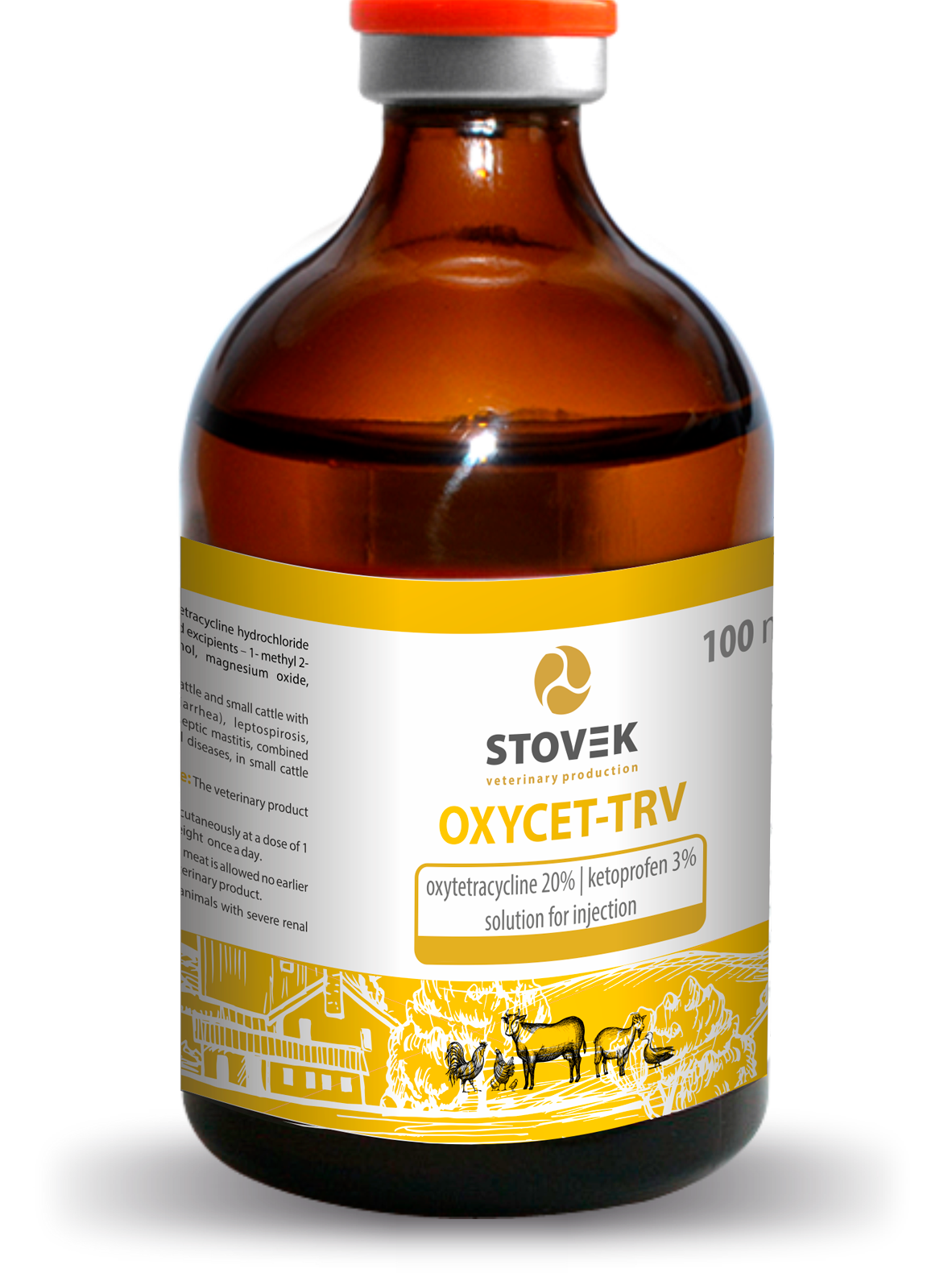
Oxycet-TRV is broad-spectrum antibacterial veterinary product.
Oxytetracycline has a broad spectrum of antibacterial action, inhibits the growth of most gram-positive and gram-negative microorganisms, including: gram-positive - Staphylococcus spp., Streptococcus spp.; Corynebacterium spp., Clostridium spp., Erysipelothrix rhusiopathiae, etc.; gram-negative bacteria - Escherichia coli, Pasteurella spp., Salmonella spp., Bordetella spp., Actinobacillus spp., Brucella spp. and etc.; as well as Rickettsia spp., Chlamydia spp., Mycoplasma spp. protozoa and spirochetes.
It has no effect on Pseudomonas aeruginosa, Proteus.
The mechanism of action of oxytetracycline is based on the suppression of protein synthesis by the microbial cell (blockade of ribosome function) and blockade of RNA synthesis.
Ketoprofen is a propionic acid derivative and has a pronounced anti-inflammatory, analgesic and antipyretic effect.
The mechanism of action of ketoprofen is to suppress the synthesis of prostaglandins as a result of effects on the metabolism of arachidonic acid. The therapeutic effect of ketoprofen is due to its ability to inhibit the synthesis of an enzyme involved in the synthesis of prostaglandins, and to reduce the biosynthesis of prostaglandins directly responsible for the appearance of edema and pain in the focus of inflammation.
The veterinary product is rapidly absorbed into the bloodstream and penetrates into most organs and tissues of the body. The maximum concentration of the antibiotic in the blood is reached after 30-60 minutes and is maintained at a therapeutic level for 3 days after a single injection of the veterinary product.
Oxytetracycline is excreted from the body mainly in the urine and partially in feces, in lactating animals - in milk, ketoprofen is excreted from the body mainly in the urine.
Oxicet-TRV, according to the degree of the exposure, belongs to low-hazard substances (hazard class 4 according to GOST 12.1.007-76).