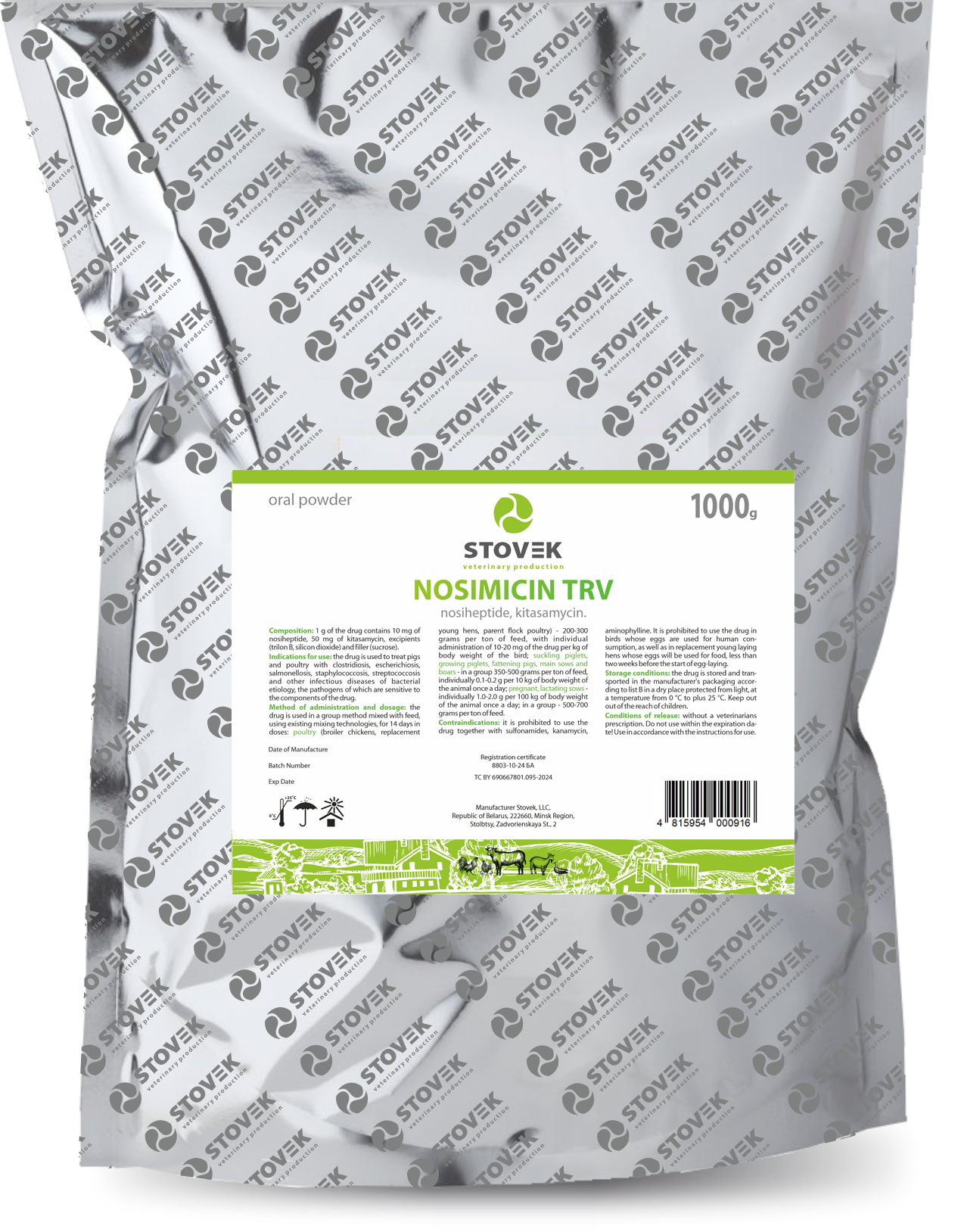
The active substances of the drug exhibit synergistic action, thereby expanding the spectrum of antimicrobial activity. The combination of active ingredients is highly active against gram-negative (Escherichia coli, Salmonella spp., Haemophilus spp.), gram-positive bacteria (Streptococcus spp., Staphylococcus spp., Clostridium spp., Corynebacterium spp., Listeria monocytogenes), as well as Mycoplasma spp.Nosiheptide is a bicyclic thiopeptide. The mechanism of antibacterial action is to disrupt bacterial protein synthesis; inhibits the functions of elongation factors Tu and G and significantly reduces the synthesis of guanosine penta- and tetraphosphates in response to the stringent factor. This involves specific pentose methylation of the 23-s ribosome. Nosiheptide acts on the 50-s ribosomal subunits and binds the 23-s rRNA complex to the ribosomal protein L11. When administered orally, nosiheptide is not absorbed from the gastrointestinal tract and creates a high concentration in its lumen. Nosiheptide does not accumulate in tissues and is excreted unchanged from the body. Does not have a negative effect on obligate microorganisms in the gastrointestinal tract.
Kitasamycin is an antibiotic from the macrolide group. The mechanism of antibacterial action is based on the ability to reversibly bind to the catalytic peptidyl transferase center of the ribosomal 50S subunit and cause the cleavage of the peptidyl t-RNA complex. As a result, the process of formation and growth of the peptide chain in the cells of sensitive microorganisms is suspended. Kitasamycin is quickly absorbed from the gastrointestinal tract and penetrates well into all organs and tissues of animals. The maximum concentration of the drug in the blood is achieved 1.5-2 hours after oral administration and is maintained at a therapeutic level for 24 hours. The drug is distributed mainly in the internal organs, and concentrations in the liver, lungs, kidneys and muscles generally exceed plasma concentrations.
Metabolites are excreted mainly in bile, renal excretion is 5-10%.
The drug, according to GOST 12.1.007-76, belongs to hazard class IV (low-hazard substances).