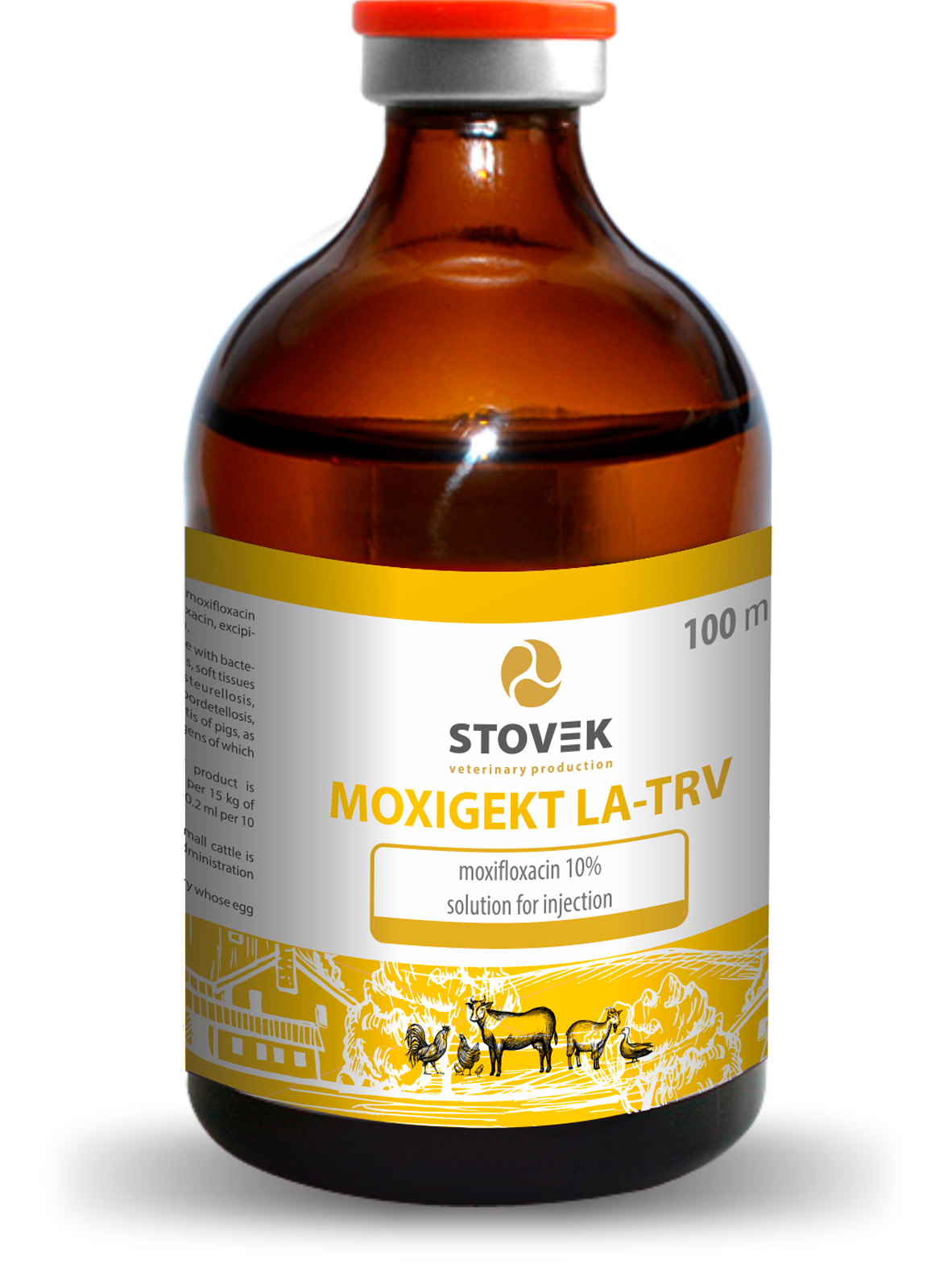
The drug has a prolonged antimicrobial effect against a wide range of gram-positive and gram-negative microorganisms, anaerobic, acid-resistant and atypical bacteria, as well as bacterial strains resistant to beta-lactams and macrolides.
It is active against gram-negative (Escherichia coli, Klebsiella spp., Salmonella spp., Proteus spp., Campylobacter spp., Pseudomonas aeruginosa, Bordetella spp., Pasteurella spp., Haemophilus spp. (including both β-lactamase producing and non- β-lactamase producing strains), Actinobacillus spp., Moraxella spp., Enterobacter spp.), gram-positive bacteria (Staphylococcus epidermidis, Staphylococcus aureus (including β-lactamase producing ones), Streptococcus pneumoniae (including those resistant to penicillin and macrolides), Streptococcus pyogenes (А group), Streptococcus agalactiae, Streptococcus dysgalactiae, Corynebacterium spp.), anaerobic microorganisms: Clostridium spp., Bacteroides spp., Fusobacterium spp.), as well as Mycoplasma spp., Chlamydia spp., Leptospira spp.
Resistance to moxifloxacin develops slowly. Cross-resistance between moxifloxacin and other classes of antimicrobials is unknown.
Moxifloxacin – is a synthetic chemotherapeutic antibiotic belonging to the IV generation fluoroquinol group which has a pronounced post-antibiotic effect.
The mechanism of bactericidal action is due to the inhibition of enzymes (topoisomerases II (DNA gyrase) and IV) that leads to disruption of replication, repair and transcription of microbial DNA biosynthesis’ processes and, as a result, the death of microbial cells.
The minimal bactericidal concentrations of moxifloxacin are comparable to its minimal inhibitory concentrations.
During parenteral administration the drug is well and quicky absorbed from the injection site and distributed throughout the body. High concentrations of moxifloxacin, exceeding those in plasma, are created in the lung tissue (including those in the epithelial fluid, alveolar macrophages), in the nasal sinuses (maxillary and ethmoid sinuses), in nasal polyps, foci of inflammation (in the contents of blisters with skin lesions), in the tissues of the abdominal organs, peritoneal fluid, as well as in the tissues of the genitourinary system. In the interstitial fluid and in saliva, moxifloxacin is determined in free, non-protein-bound form at a higher concentration rate than in plasma. Serum protein binding is made up to approximately 30-50% and does not depend on the concentration of the substance.
Moxifloxacin is subjected to biotransformation of the 2nd phase and is excreted from the body with urine and feces, both in unchanged and inactive sulfo compounds (M1) and glucuronides (M2) forms, as well as with milk in case of lactating animals. An increase in the elimination period is possible if liver and kidney functions are impaired.