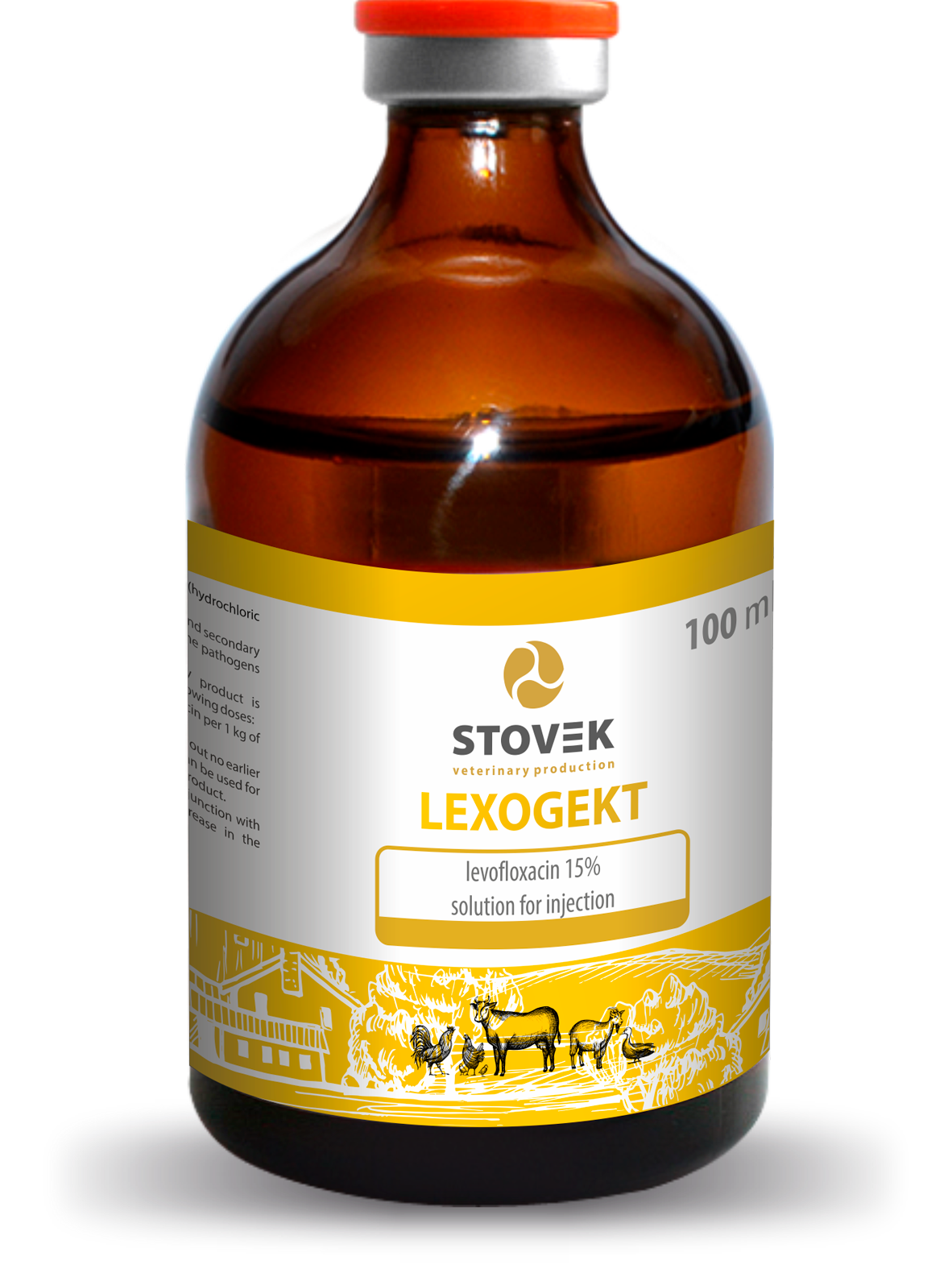
Levofloxacin, the veterinary product's component, is a synthetic chemotherapeutic antibiotic from the fluoroquinol group.
The product has a broad spectrum of antimicrobial action against aerobic gram-positive micro-organisms (Enterococcus spp., Listeria monocytogenes, Staphylococcus spp. (including Staphylococcus aureus), Streptococcus spp.), aerobic gram-negative micro-organisms (Campylobacter spp., Enterobacter spp., Escherichia coli, Haemophilus spp., Klebsiella spp., Pasteurella spp., Mannheimia haemolytica, Proteus spp., Pseudomonas spp., Salmonella spp.), anaerobic micro-organisms (Clostridium perfringens, Fusobacterium necrophorum), as well as Bordetella spp., Chlamydia spp., Mycobacterium spp., Mycoplasma spp., Ricketsia spp. Micro-organisms do not develop resistance to the veterinary product after long-term use.
The product is effective against pathogens resistant to tetracyclines, aminoglycosides, macrolides, chloramphenicol, sulphonamides and trimethoprim.
Mechanism of action is associated with DNA-gyrase (topoisomerase II) and topoisomerase IV blockade, disruption of superspiralization and deoxyribonucleic acid gap cross-linking, inhibition of deoxyribonucleic acid synthesis, deep metabolic changes in cytoplasm, cell wall and membranes.
The product is rapidly and almost completely absorbed after parenteral administration. Bioavailability of levofloxacin is 99%, Cmax is 2 hours after administration, elimination half-life is 7 hours. It penetrates well into organs and tissues: lungs, bronchial mucosa, sputum, urogenital organs, polymorphonuclear leukocytes, alveolar macrophages. It is mainly excreted by the kidneys by glomerular filtration or tubular secretion. Levofloxacin is mainly excreted unchanged in the urine within 48 hours. In lactating animals it is also excreted with milk. Minor amounts are detected in the faeces over a period of 72 hours. If liver and kidney function is impaired, the elimination period may be prolonged.