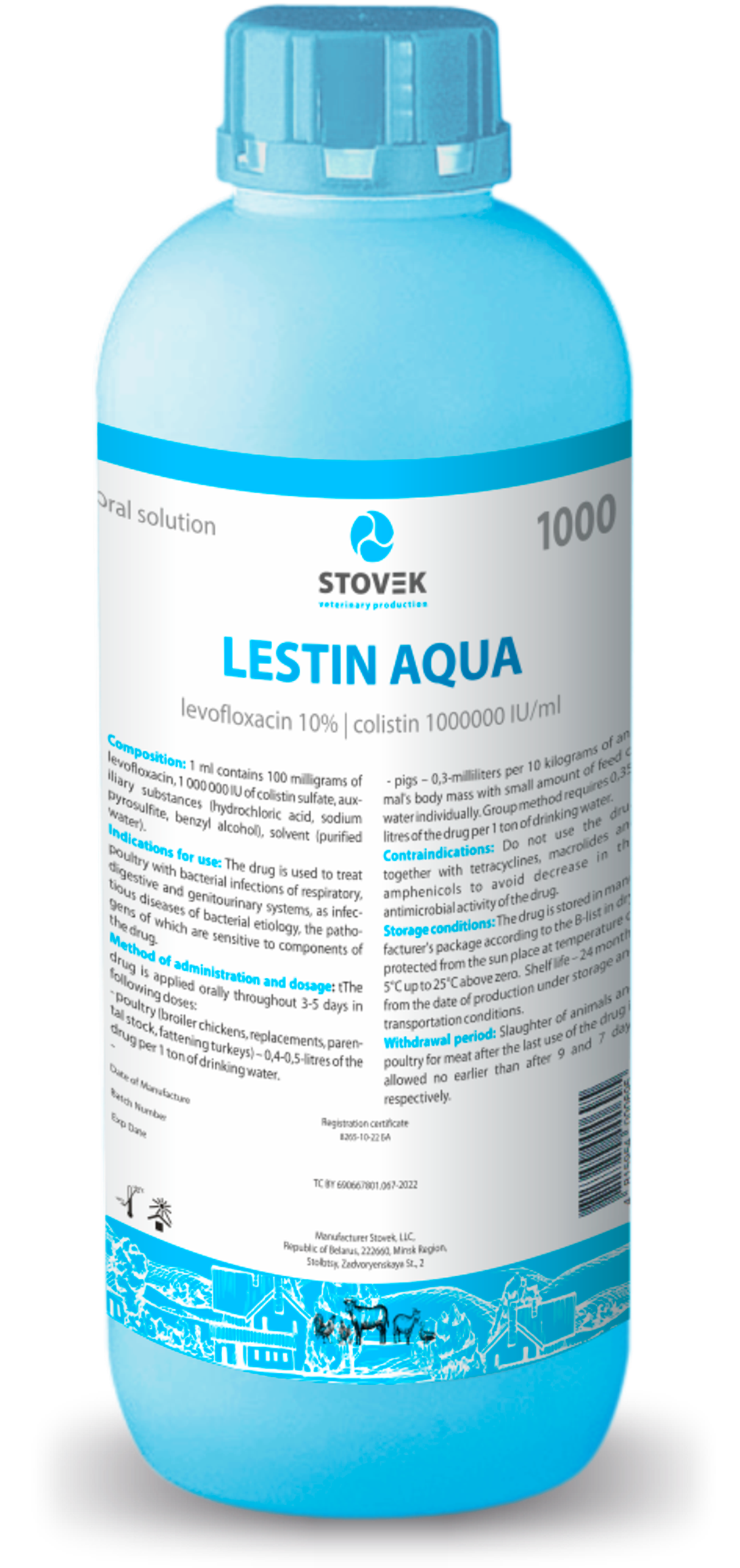
The active ingredients of the exhibit synergism, thereby enhancing the antimicrobial effect and expending the spectrum of the drug’s activity.
The drug obtains a wide spectrum of antimicrobial activity in relation to aerobic gram-positive microorganisms (Enterococcus spp., Listeria monocytogenes, Staphylococcus spp. (including Staphylococcus aureus), Streptococcus spp.)), aerobic gram-negative microorganisms (Campylobacter spp., Enterobacter spp., Escherichia coli, Haemophilus spp., Klebsiella spp., Pasteurella spp., Proteus spp., Pseudomonas spp., Salmonella spp.), anaerobic microorganisms (Clostridium perfringens, Fusobacterium necrophorum), as well as Bordetella spp., Chlamydia spp., Mycobacterium spp., Mycoplasma spp., Ricketsia spp.
Levofloxacin, which is a part of the drug, is a synthetic chemotherapeutic antibiotic from the group of fluoroquinols. The mechanism of action relates to blockade of DNA gyrase (topoisomerase II) and topoisomerase IV, impairment of supercoiling and cross-linking of deoxyribonucleic acid breaks, inhibition of deoxyribonucleic acid synthesis and profound metabolic changes in the cytoplasm, cell wall and membranes.
Colistin sulfate is an antibiotic of the polymyxin group, binding to the phospholipids of the cytoplasmic membrane, thus increasing its permeability for both intracellular and extracellular components what leads to destruction of bacterial cell wall.
In the process of the drug’s oral application levofloxacin is well and quickly absorbed in the gastrointestinal tract. Consumption of feed has little influence on the speed and completeness of its absorption. The bioavailability of levofloxacin after oral application is 99%, the concentration in blood serum reaches a maximum 2 hours after application, half-life is about 7 hours. Levofloxacin infiltrates well into organs and tissue: lungs, bronchial mucosa, sputum, organs of the genitourinary system, polymorphonuclear leukocytes, alveolar macrophages.
Colistin sulfate is absorbed from digestive tract in small amount, has a local antibacterial effect in digestive tract.
The drug is excreted from body with urine and feces. In case of liver and kidney function’s impairment, an increase in the elimination period is possible.