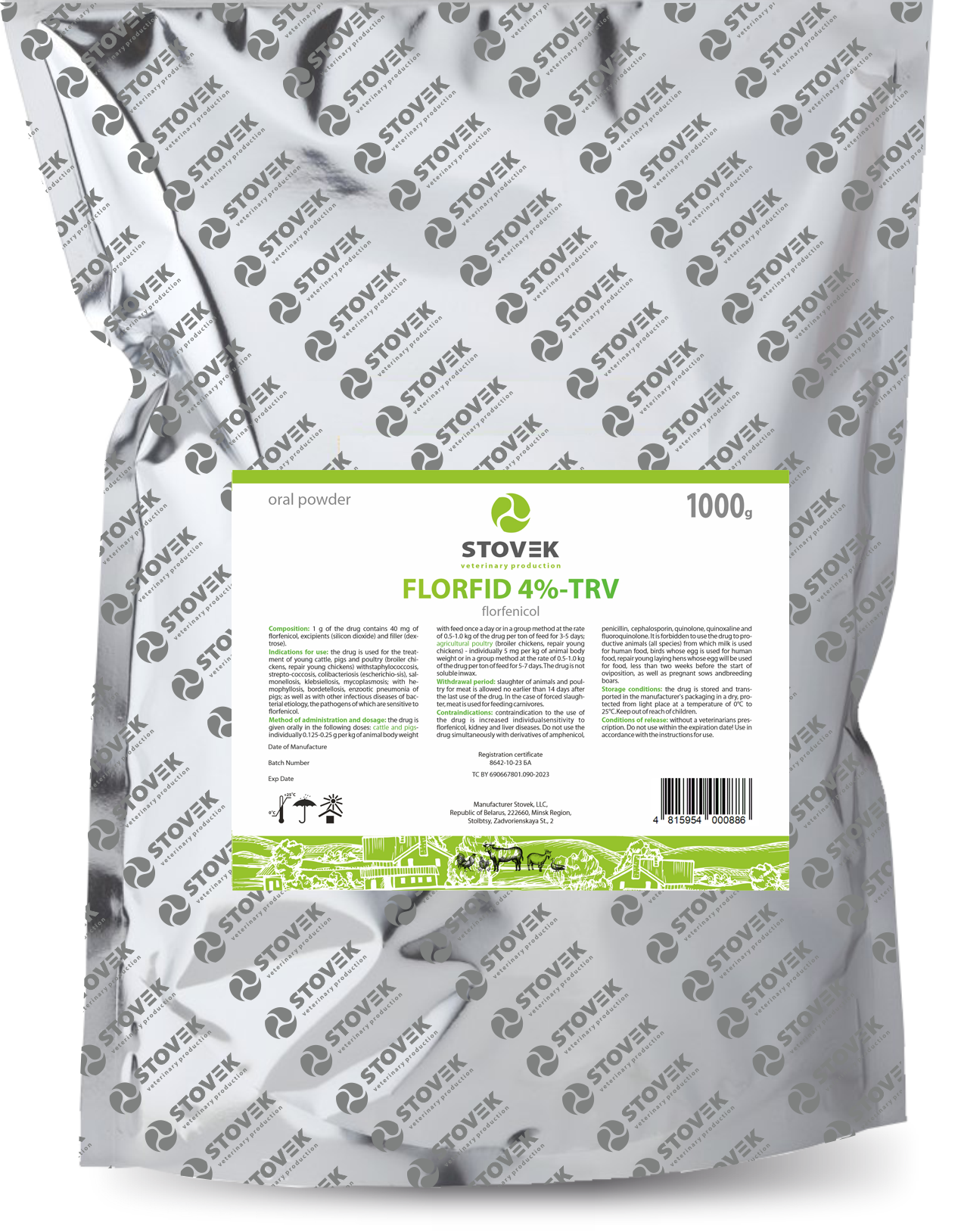
Florfenicol, which is part of the drug, belongs to a broad-spectrum antibiotic from the amphenicol group, and is a derivative of thiamphenicol, in the molecule of which the hydroxyl group is replaced by a fluorine atom.
Has a pronounced antibacterial effect on gram-positive (Staphylococcus spp., Streptococcus spp.) and gram-negative microorganisms (Enterobacter spp., Escherichia coli, Mannheimia (Pasteurella) haemolytica, Pasteurella multocida, Haemophilus spp., Fusobacterium necrophorum, Actinobacillus pleuropneumoniae, Bordetella bronchiseptica, Salmonella spp., Klebsiella spp., Proteus spp., Ornithobacterium rhinotracheale),and is also active against most mycoplasmas (Mycoplasma spp.) and against bacteria that produce acetyltransferase and are resistant to chloramphenicol.
Florfenicol has a bacteriostatic effect, combining with the 70-S subunit of microbial ribosomes, blocking the RNA peptidyl transferase enzyme, disrupting the addition of amino acids and elongation of the peptide chain, and inhibiting bacterial protein synthesis.
The drug is well absorbed from the gastrointestinal tract, practically does not bind to blood proteins, and easily penetrates the organs and tissues of the body. The bioavailability of florfenicol after oral administration is approximately 88% in pigs and 55% in birds. The maximum concentration in the blood serum is achieved after 1 hour and is maintained in the body at a therapeutic level for up to 20-24 hours.
The antibiotic and its metabolites are excreted from the body of birds mainly with droppings; in egg-laying birds, also with eggs; from the body of pigs, florfenicol and its metabolites are excreted mainly in urine and, to a lesser extent, in feces. If liver and kidney function are impaired, the elimination period may be increased.