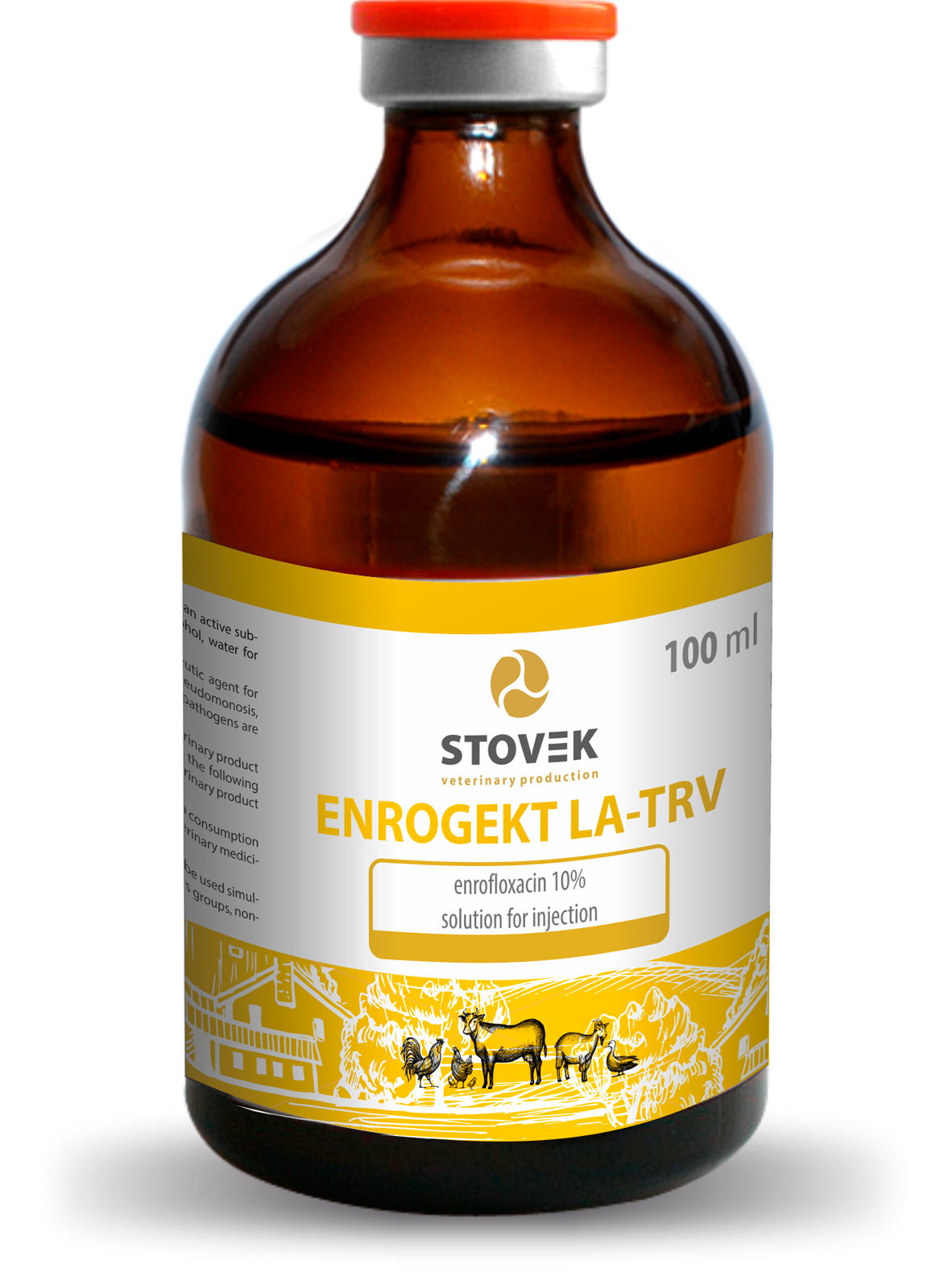
Enrofloxacin, an active substance, belongs to the group of fluoroquinolones. The mechanism of action of enrofloxacin is based on blocking the synthesis of DNA gyrase, which leads to disruption of DNA synthesis and inhibits the formation of malic acid in microorganisms.
Enrofloxacin has a broad spectrum of action against gram-positive and gram-negative bacteria, incl. Escherichia coli, Salmonella spp., Pasteurella spp., Pseudomonas aeruginosa, Haemophilus spp., Bordetella spp., Staphylococcus spp., Streptococcus spp., Clostridium spp., Leptospira spp., Proteus spp., and also Mycoplasma spp.
The veterinary medicinal product is well and rapidly absorbed in the gastrointestinal tract and penetrates into all organs and tissues of animals. The maximum concentration of the veterinary medicinal product in the blood is reached within 0.5 - 1 hour after administration and remains for 4 - 6 hours, and the therapeutic concentration - for 24 hours. The veterinary medicinal product practically does not undergo biotransformation in the body.
Enrofloxacin is excreted unchanged from the body, mainly in urine and faeces.