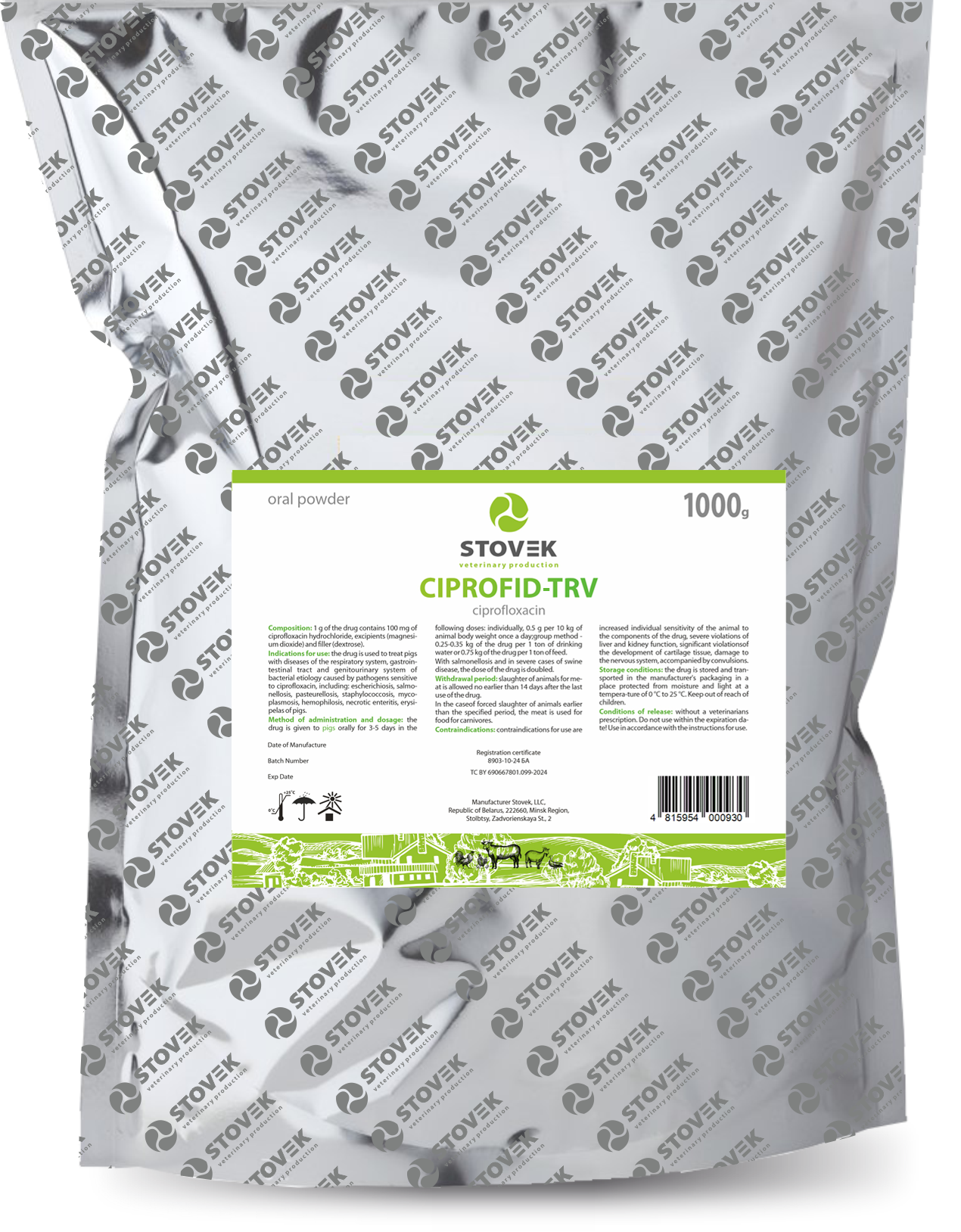
Ciprofloxacin hydrochloride, which is part of the drug, is a synthetic antibacterial agent of the fluoroquinolone group, has a wide spectrum of antimicrobial action.
The drug is active against gram-positive microorganisms (Enterococcus spp., Listeria monocytogenes, Staphylococcus spp. (including Staphylococcus aureus), Streptococcus spp., Erysipelothrix rhusiopathiae), gram-negative microorganisms (Campylobacter spp., Enterobacter spp., Escherichia coli, Haemophilus spp. ., Klebsiella spp., Pasteurella spp., Pseudomonas aeruginosa, Salmonella spp.), anaerobic microorganisms (Clostridium spp., Fusobacterium necrophorum), as well as Mycoplasma spp.
The mechanism of action is to inhibit DNA gyrase (topoisomerases II and IV, responsible for the process of folding chromosomal DNA into a superhelix around nuclear RNA), which disrupts DNA biosynthesis, growth and division of bacteria. Ciprofloxacin causes pronounced morphological changes (including cell wall and membranes) and rapid cell death.
When administered orally, ciprofloxacin hydrochloride is well and quickly absorbed from the gastrointestinal tract. Penetrates into tissues, fluids and cells of the body, creating high concentrations in the kidneys, gall bladder, liver, lungs, bronchial and sinus mucosa, genitals, phagocytic cells, urine, sputum, bile, cerebrospinal fluid, saliva, skin, adipose tissue, muscles , bones, cartilage, passes through the placenta. The maximum concentration in the blood is achieved after 0.5-2.5 hours, bioavailability is more than 70%. Therapeutic concentration lasts up to 24 hours.
Ciprofloxacin hydrochloride is biotransformed in the liver (15-30%) with the formation of low-active metabolites. It is excreted mainly in the urine by the kidneys (through glomerular filtration and tubular secretion) unchanged and in the form of metabolites, the rest through the gastrointestinal tract (with bile and feces); a small amount - with milk. If liver and kidney function are impaired, the elimination period may be increased.
In terms of the degree of impact on the body, the drug is classified as a low-hazard substance (4th hazard class according to GOST 12.1.007-76).