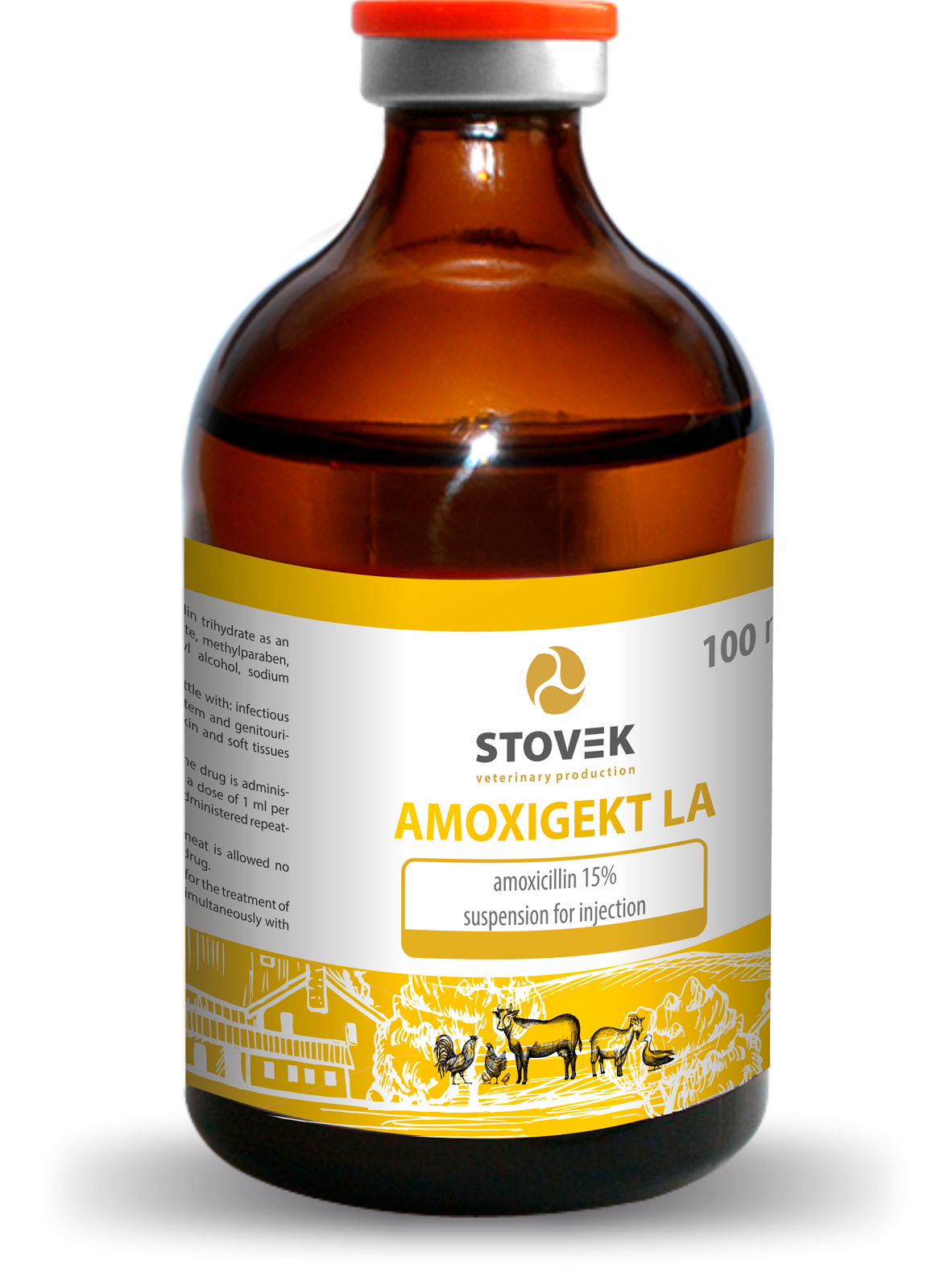
Amoxicillin is a penicillin group semi-synthetic antibiotic. It has a wide spectrum of bactericidal action against gram-positive microorganisms, including Staphylococcus spp., Streptococcus spp., Escherichia coli, Salmonella spp., Actinobacillus spp., Pasteurella spp., Haemophilus spp., Bordetella spp., Chlamydia spp., Erysipelothrix rhusiopathiae, Corynebacterium spp., Fusobacterium spp., Leptospira spp., Listeria monocytogenes, Clostridium spp., Klebsiella spp., Proteus spp. The strains of microorganisms that produce beta-lactamases are resistant to amoxicillin.
When it enters the tissues of the animal's body, amoxicillin begins to actively stimulate the synthesis of transpeptidase, as a result of which the production of protein compounds in the cellular structures of bacteria is damaged. This makes it impossible for the process of division and growth of bacterial cells, their destruction occurs.
When administered parenterally, amoxicillin is well absorbed from the injection site and rapidly distributed, reaching the highest plasma concentration in 1-2 hours after drug administration and remains at a therapeutic level for 48 hours. Amoxicillin is practically not metabolized.
Amoxicillin is excreted mainly with the urine, to a lesser extent in milk and feces.