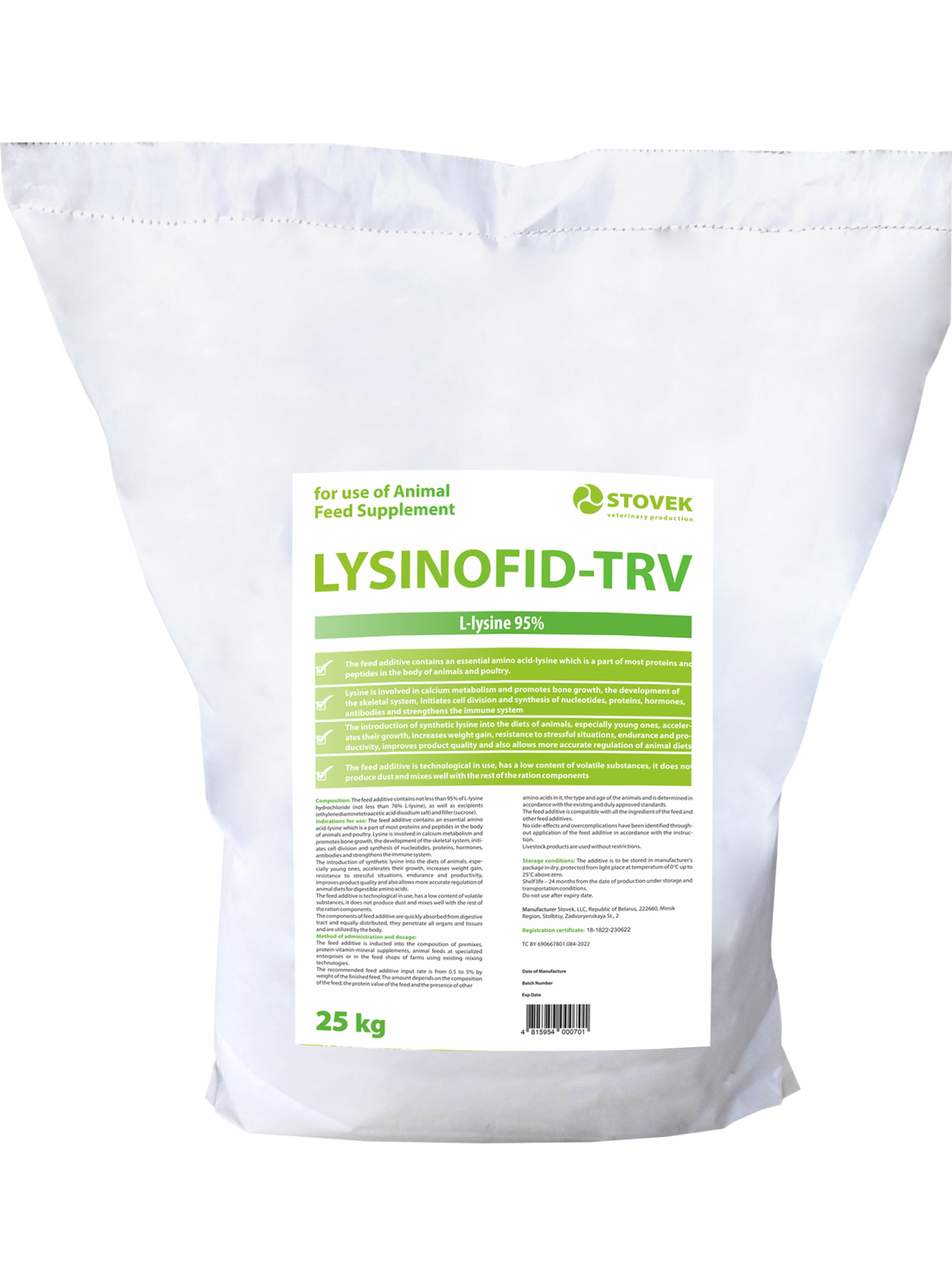
The feed additive contains an essential amino acid-lysine which is a part of most proteins and peptides in the body of animals and poultry. Lysine is involved in calcium metabolism and promotes bone growth, the development of the skeletal system, initiates cell division and synthesis of nucleotides, proteins, hormones, antibodies and strengthens the immune system.
The introduction of synthetic lysine into the diets of animals, especially young ones, accelerates their growth, increases weight gain, resistance to stressful situations, endurance and productivity, improves product quality and also allows more accurate regulation of animal diets for digestible amino acids.
The feed additive is technological in use, has a low content of volatile substances, it does not produce dust and mixes well with the rest of the ration components.
The components of feed additive are quickly absorbed from digestive tract and equally distributed, they penetrate all organs and tissues and are utilized by the body.
Concerning the degree of impact on the body, the feed additive belongs to low-hazard substances, does not have sensitizing, embryotoxic, teratogenic and mutagenic effects, as well as it does not contain genetically modified products and organisms.