

Gepavit aqua
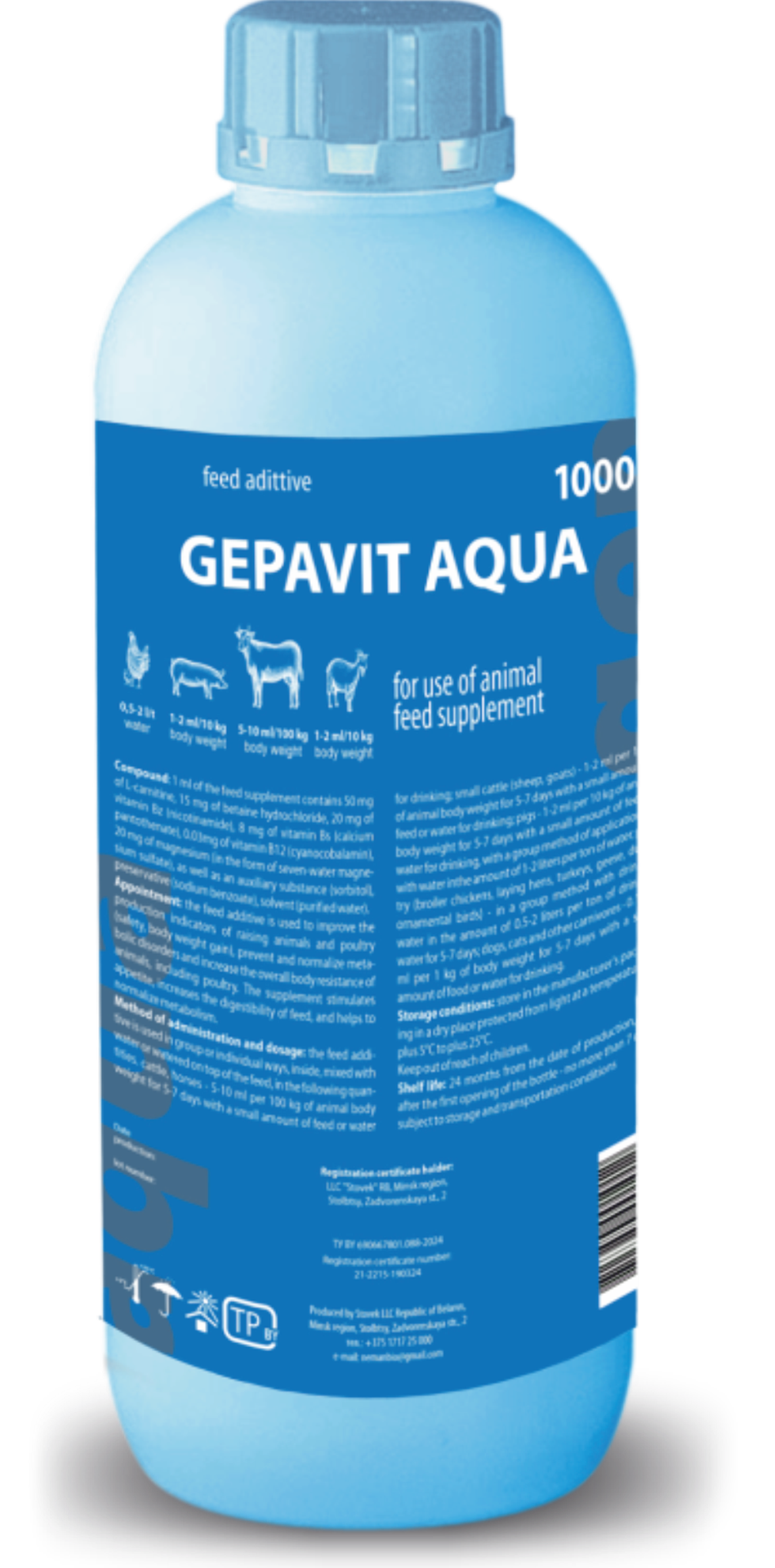
Gepavit aqua
A feed additive, 1 l of which contains 50 mg L-carnitine, 15 mg betaine hydrochloride, 20 mg vitamin B3 (nicotinamide), 8 mg vitamin B5 (calcium pantothenate), 0.03 mg vitamin B12 (cyanocobalamin), 20 mg magnesium (in the form of magnesium sulfate heptahydrate), as well as an auxiliary substance (sorbitol), a preservative (sodium benzoate), a solvent (purified water).
The feed additive is used to improve the production indicators of growing animals and poultry (survival, weight gain), prevent and normalize metabolic disorders and increase the overall resistance of the body in animals, including poultry.
The additive stimulates appetite, increases the digestibility of feed, and helps normalize metabolism.
The feed additive is used in groups or individually, internally, mixed with water or poured over the feed, in the following quantities
- Cattle and horses
5-10 ml per 100 kg of animal body weight for 5-7 days with a small amount of feed or water for drinking;
- Small cattle (sheep, goats)
1-2 ml per 10 kg of animal body weight for 5-7 days with a small amount of feed or water for drinking;
- Pigs
- Poultry
broiler chickens, laying hens, turkeys, geese, ducks, ornamental birds - in groups with drinking water in the amount of 0.5-2 liters per ton of drinking water for 5-7 days.
The properties of the feed additive are determined by the components included in its composition, the action of which is aimed at improving the metabolic functions of the body in animals and birds during stress, intensive growth and peak productivity, as well as increasing overall resistance, normalizing metabolism, and improving the digestibility of feed.
L-carnitine is an amino acid that regulates fatty acid metabolism, participating in the process of removing free fatty acids. By removing excess lipids that have immunosuppressive properties, carnitine indirectly stimulates immune system cells.
L-carnitine is involved in energy metabolism, responsible for the transport of long-chain fatty acids into the mitochondria, which allows the body to use additional energy sources and increases energy production, and also increases the activity of digestive enzymes.
Betaine hydrochloride is a trimethyl derivative of glycine, belongs to the class of amino acids. It participates in many biochemical processes in the body, in particular, it starts the process of producing phospholipids in cell membranes. Betaine helps remove toxic substances from the body, improves liver function, has a beneficial effect on metabolism in general, and promotes the production of glutathione, which has a powerful antioxidant effect. As an osmolyte, betaine increases the retention of intracellular water and, therefore, protects intracellular enzymes from inactivation by osmosis. As a methyl group donor, betaine participates in the methionine cycle (mainly in the liver) and can be further used in transmethylation reactions for the synthesis of such essential substances as carnitine and creatine.
Magnesium sulfate is a source of magnesium. Magnesium regulates metabolic processes, neurochemical transmission and muscle excitability, prevents the entry of Ca2+ ions through the presynaptic membrane, reduces the amount of acetylcholine in the peripheral nervous system and the central nervous system. Stimulates intestinal peristalsis, increases the digestibility of food.
Nicotinamide stimulates the synthesis of nicotinamide adenine dinucleotide (NAD) and nicotinamide adenine dinucleotide phosphate (NADP), which are cofactors of many enzymes. Nicotinamide in the form of NAD and NADP participates in oxidation-reduction reactions, ensuring the normal course of various types of metabolism. Participates in the metabolism of fats, proteins, amino acids, purines, tissue respiration, glycogenolysis, biosynthesis processes, normalizes the concentration of blood lipoproteins.
Calcium pantothenate in the body is converted into pantethine, which is part of coenzyme A, which in turn participates in the metabolism of proteins, fats and carbohydrates. It takes an active part in the processes of oxidation and biosynthesis of fatty acids, the synthesis of acetylcholine, steroid hormones, mucopolysaccharides.
Cyanocobalamin is a growth factor, necessary for normal hematopoiesis and maturation of erythrocytes, takes part in the synthesis of labile methyl groups, activates the synthesis of methionine, choline, nucleic acids.Vitamin B12 has a pronounced lipotropic effect, prevents the development of fatty liver infiltration, participates in the synthesis of labile methyl groups, activates the synthesis of methionine, choline, nucleic acids, participates in the synthesis and accumulation of proteins. Strengthens immunity by increasing the phagocytic activity of leukocytes and activating the reticuloendothelial system.